

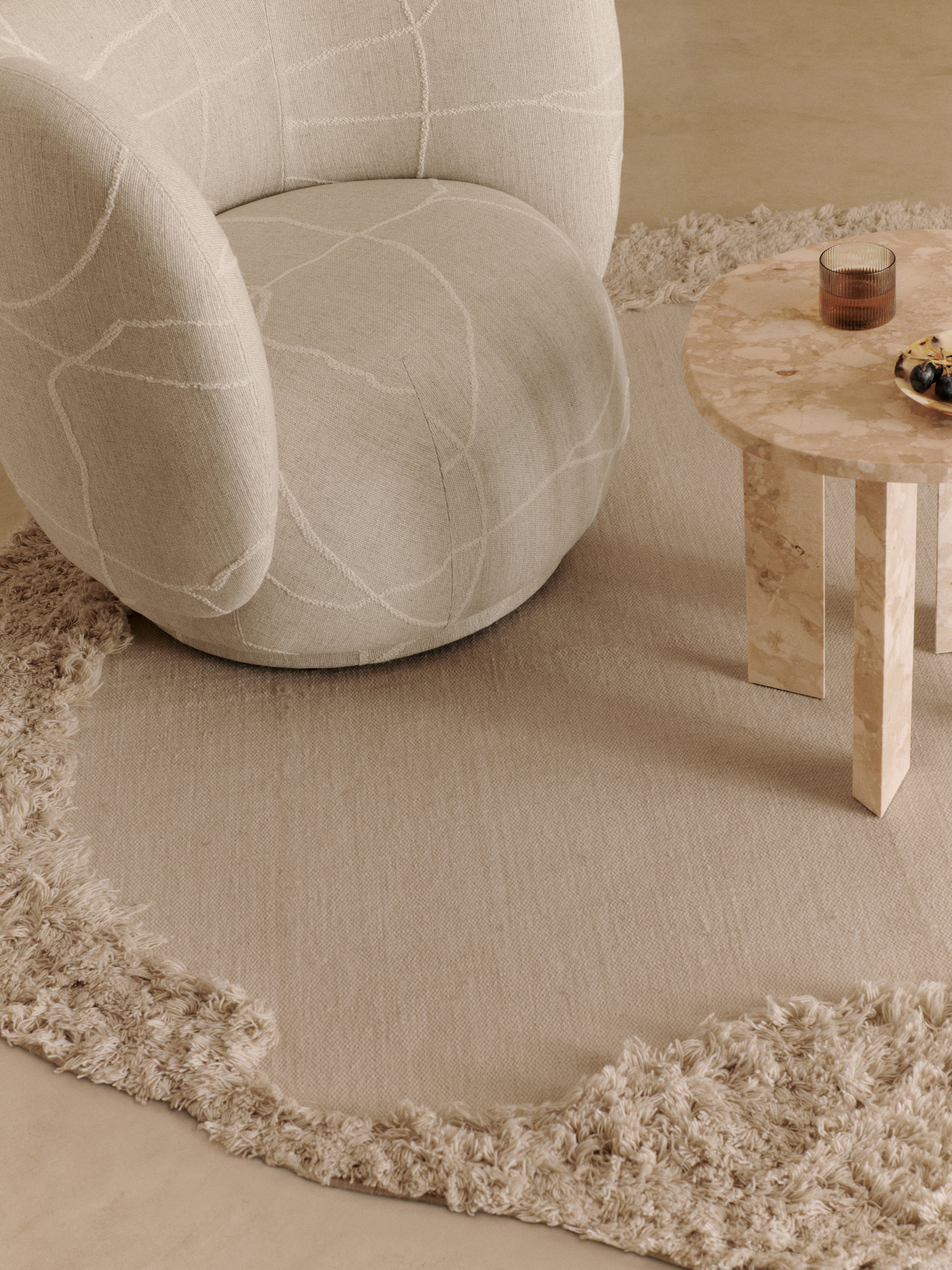

For several seasons, beiges have dominated interior design. They appear in living rooms, bedrooms, and kitchens, creating calm, harmonious spaces.
Naturally, the question arises: is this trend ending? The answer is — no, but it is changing. Beiges are not disappearing; they are evolving in a more complex and sophisticated direction.
Is the trend for beiges coming to an end?

Beige shades remain in fashion, but their character is changing.
Classic, solid beiges are giving way to more complex shades. Today, the color beige is one of the main pillars of contemporary trends and is no longer perceived solely as a neutral color. It is increasingly associated with luxury and modern elegance. Instead of flat color schemes, we see:
greige, which is beige with a hint of gray
taupe
warm beige
creamy beiges
broken neutral colors
Beige interiors are no longer one-dimensional but tonal — built from several tones within one palette, where different and light shades harmonize with the earth tones.
Designer tip: Combining different tones of beige in one space adds depth and makes the arrangement look more premium, as beige shades are easily personalized with accessories.

From total look to layers in interior design
Not long ago, interiors completely maintained in one shade were trendy, but today beiges and the color beige are treated as a neutral color with many variations that do not impose a style and support both classic and modern arrangements well. Currently, beige interiors are combined with:
natural wood
stone
soft fabrics
subtle contrasts
light shades
variations with a hint of gray
warm beige
Today, the most fashionable tones are sandy, stone, oat, cinnamon, and caramel, with the Pantone Institute also highlighting Cloud Dancer as one of the key colors of the season.
As a result, interiors become more diverse with various textures, weaves, and natural materials, helping to build a cozy atmosphere without chaos in the decor.

Beige interiors are moving towards soft minimalism.
Beiges perfectly align with the soft minimalism trend, and the contemporary total look does not rely on a single material but rather on the combination of various materials. This approach works well in the living room, creating a beige space that is calm, understated, and refined.
This effect is visible in both modern and classic arrangements, especially when a harmonious space is important. Soft minimalism also draws from Scandinavian style and the Japandi style, which is why simple lines and geometric forms fit so well here. This trend is based on:
neutral palette
soft forms
natural materials
limited number of accessories
soft fabrics and various textures, as well as elements like rattan or wicker
furnishings where the furniture does not dominate but organizes the whole
Woven textures and similar details help create a more organic, cozy character in the interior.
That’s why the trend for beiges remains relevant — it serves as a foundation for new directions.
Designer tip: Instead of one color, use several textures in a similar shade. This is a simple way to achieve elegant depth. In 2026, beige interiors will increasingly combine natural materials and textures.

What accessories appear alongside beiges?
New trends do not replace beiges but complement them. They most often appear:
warm browns
olive green
broken shades of white
sandy grays
natural wood
simple lines
geometric shapes
It is still a calm palette, just more varied. Beige interiors are the perfect backdrop for various design styles, from minimalist to classic, and a beige living room can be arranged both modernly and more traditionally. This direction also works great in Japandi and Scandinavian styles.
Beige pairs with many colors and does not lose its lightness with them, which is why light colors remain a safe base. Subtle accents, such as mint or bottle green, pair beautifully with green and wood. Details also work well as accents, and black introduces a clearer contrast. If you want a stronger effect, opt for black accents, black frames, and metallic elements.
Designer tip: a beige living room in a minimalist or more classic style remains flexible in terms of arrangement. In 2026, such interiors will align even more with the slow living trend, which emphasizes peace, harmony, and comfort.

Can beiges become boring?
Beiges look timeless when well combined. New trends do not replace beiges, as this color still pairs well not only with natural neutrals but also with white, pastels, and stronger accents. The problem arises when the interior is:
too uniform
lacking textures
based on a single shade
Then the arrangement may seem flat, especially when beige walls lack a break with another texture or detail. If you want to liven up a beige living room, sometimes it’s enough to highlight one wall or introduce more varied fabrics.
Designer Tip: Adding material contrast (e.g., wood + linen + stone) refreshes a beige interior without changing the color scheme. In a white-beige living room, it’s worth opting for a light, timeless duo of beige and white, as this combination reflects light well. Mint green is an ideal solution when you want to add energy to the arrangement without losing tranquility. On the other hand, bottle green or deep burgundy is a great choice when the beige living room needs to gain a more distinct character.
A beige living room can also gain a lot from details such as curtains or beige accessories, and a beige-brown living room remains one of the most classic and cozy solutions. A beige living room also works well in dimly lit spaces, as it helps to visually brighten the area. Notice how beige can work for your interior even in a lighter version: a white-beige living room with black accents, such as black frames, creates an elegant contrast.

Summary
The Trend for Beiges in the Living Room is not ending — it is transitioning into a more mature phase. Instead of uniform arrangements, layers, textures, and tonal combinations are emerging, as boredom usually results from a lack of contrast, overly flat materials, and poorly thought-out decor. Beige walls in the living room reflect light and work well in dimly lit areas. If the overall look seems too monotonous, simply refresh one wall or introduce beige accessories and curtains.
Beige interiors remain the foundation of elegant, calm arrangements and continue to fit into the premium aesthetic, whether it’s a white-beige or beige-brown living room. In the living room, such a color acts as a neutral backdrop, promoting relaxation and rest, and the designer's advice can be summed up simply: instead of changing the entire color base, it’s better to focus on textures, natural materials, and single stronger accents. This is not a fleeting trend, but a direction that evolves with the need for harmony and timelessness.


