

In an era of returning to nature and botanical themes, Verner Panton's innovative designs, rooted in modernist aesthetics and the use of plastics, offer not only an intriguing departure from repetitive interiors but also a delightful surprise that proves his work is timeless and ever-vibrant. The sense of wonder is further amplified by the fact that Verner Panton hailed from a country renowned for its understated design and the use of natural materials, namely Denmark. Discover Verner Panton and his extraordinary world filled with modern solutions.

Who was Verner Panton?
Verner Panton is an outstanding designer who literally revolutionized the approach to interior design and functional art with his works. The artist was born on February 13, 1926, in Gemtofte, Denmark. Even as a small child, he showed artistic talent. His interest in art quickly became apparent, as young Verner Panton often painted and sculpted. Ultimately, however, his creative spirit turned towards creating more utilitarian designs. Driven by his talent and passion, Verner Panton decided to begin his studies at the Royal Danish Academy of Fine Arts in Copenhagen. The studies proved to be his gateway to the great world and to great artists, as a year before their completion, Verner Panton met the design icon — Arne Jacobsen. Panton was impressed by both Jacobsen's personality and his extraordinary articles, which were already very popular at that time. Fortunately for him, Jacobsen also took an interest in the young man and offered him a job. Young Panton worked for his guru for about two years. This was an incredibly fruitful time for Verner, both in terms of learning and developing his passions and interests.

One of the most important projects that Verner Panton had the opportunity to work on is undoubtedly the "Ant" chair. This piece of furniture solidified Jacobson's position in the design world and marked his presence in the canon for good. This event had a huge impact on Panton. However, Verner Panton soon decided to end his fruitful collaboration with Jacobson in favor of... travel. Yes, Verner Panton chose to explore the world, specifically Europe, and not just in any way, but in a converted van. Panton created a camper that allowed him to travel across Europe in search of inspiration and to familiarize himself with the most important works of art. It quickly became clear that his decision to travel not only enriched his soul but also his career. Thanks to nearly three years of travel, Verner Panton met many influential people and gained contacts that later proved to be extremely helpful. Moreover, during his travels, Panton designed two famous chairs: “Tivoli” and “Bachelor,” which soon brought him considerable recognition. Although the models were very conservative and differed from Panton's later (bold and unconventional) designs, it was these that opened the door to his global career.

The designs of chairs captivated the owners of Fritz Hansen to such an extent that they decided to take on their production. Verner's streak of success seemed endless, as he had already participated in a competition organized by the "Neue Gemeinschaft für Wohnkultur" (WK-Möbel) in 1956. Although the furniture he designed did not win the main prize, it caught the attention of investors and private individuals who began to appreciate Panton for his unconventional approach to furniture creation. Verner entered the competition with a collection of furniture that included designer chairs with integrated seats and backs — these extraordinary pieces seemed not only elegant and modern but, above all, functional.
The beginning of a great career in the family business
Two years after Verner Panton participated in the competition, his father offered him a job at his restaurant. While the journey from a budding designer with great talent to a restaurant employee may seem unremarkable, it is important to dispel any doubts at this point and clearly state that it was, of course, about the interior design of the restaurant. It was then, in 1958, that Verner Panton could fully unleash his imagination and create something of his own. After successfully arranging his father's restaurant, Verner Panton decided to tackle his own interior. The designer purchased a house in Binningen, which he decided to furnish in accordance with his unique style. Unique, because the interior was filled with furniture of his own design, and the walls practically screamed with colors. An interesting motif was also the geometric patterns present in almost every room.
5 Panton designs you should know!
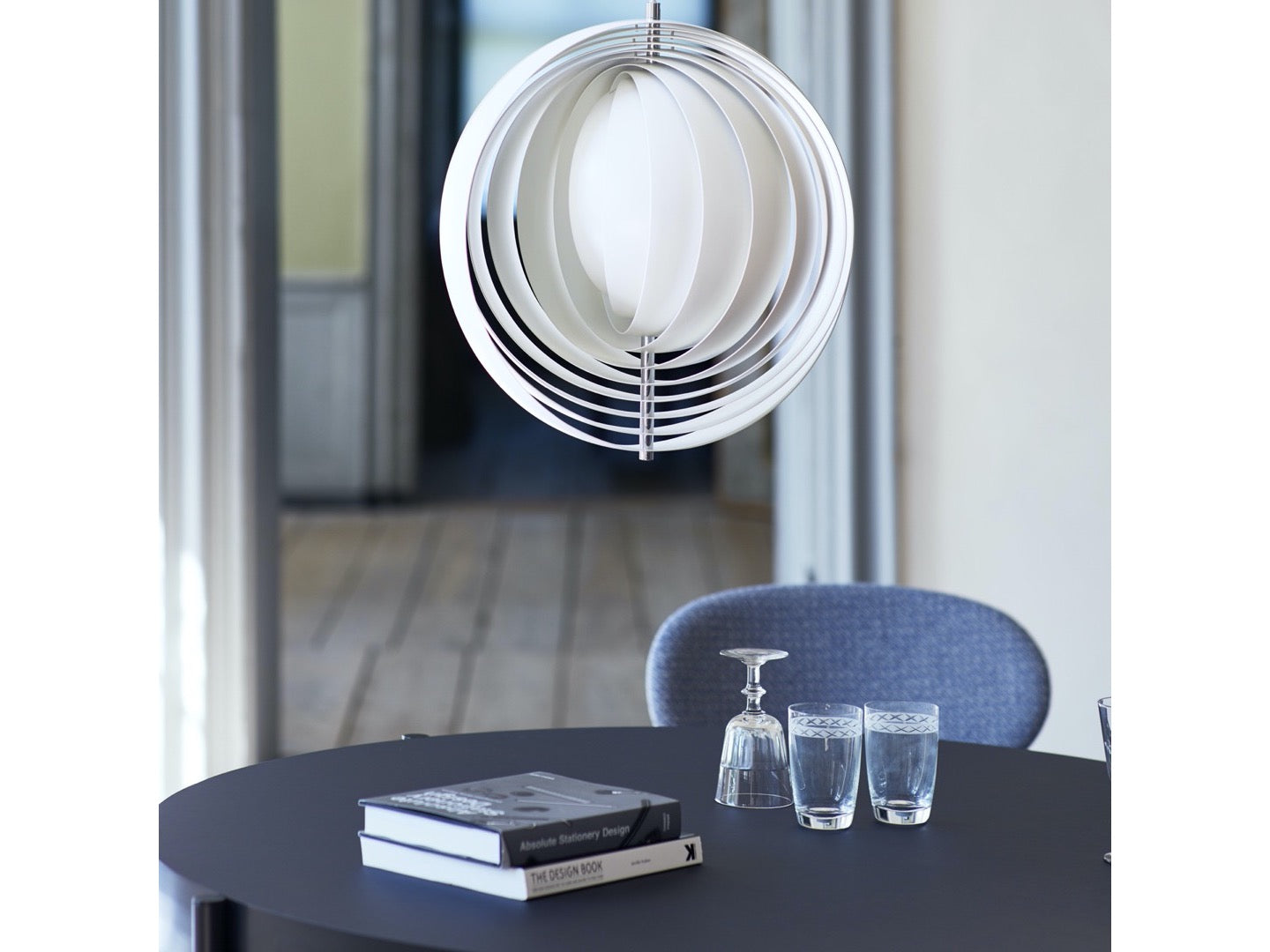
Lamps from the Moon collection
The Moon lamp is lighting that, in its simple form, encompasses all phases of the moon. By using several rings that come together as a whole, the Moon lamp surprises with its design and adds character and elegance to the interior it inhabits.
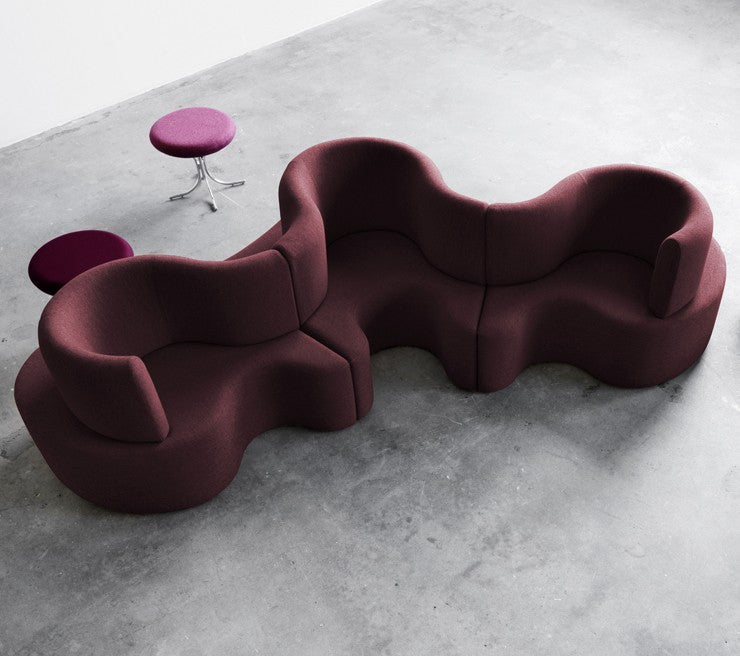
Cloverleaf Sofas
The Cloverleaf sofa model was designed in 1969. This exceptional construction is not only incredibly interesting but also functional. Its elegant form and unusual shape have made the Cloverleaf project one of Verner Panton's most distinctive works. The Cloverleaf sofa is an organic piece of art that allows for comfortable relaxation.
By choosing to introduce the Cloverleaf Sofa into your interior, you can be sure that this model will take over your space, adding character and, above all, a touch of nonchalance.
Chairs 123
Chair 123 is an absolute classic. The characteristic curve typical of Verner Panton's designs, along with its comfortable finish, makes chair 123 stand out among other projects while remaining true to Panton's style. Model 123 has seen many variations - it is currently available in both classic and Deluxe versions. The Deluxe option features additional tufting on the seat and frame.
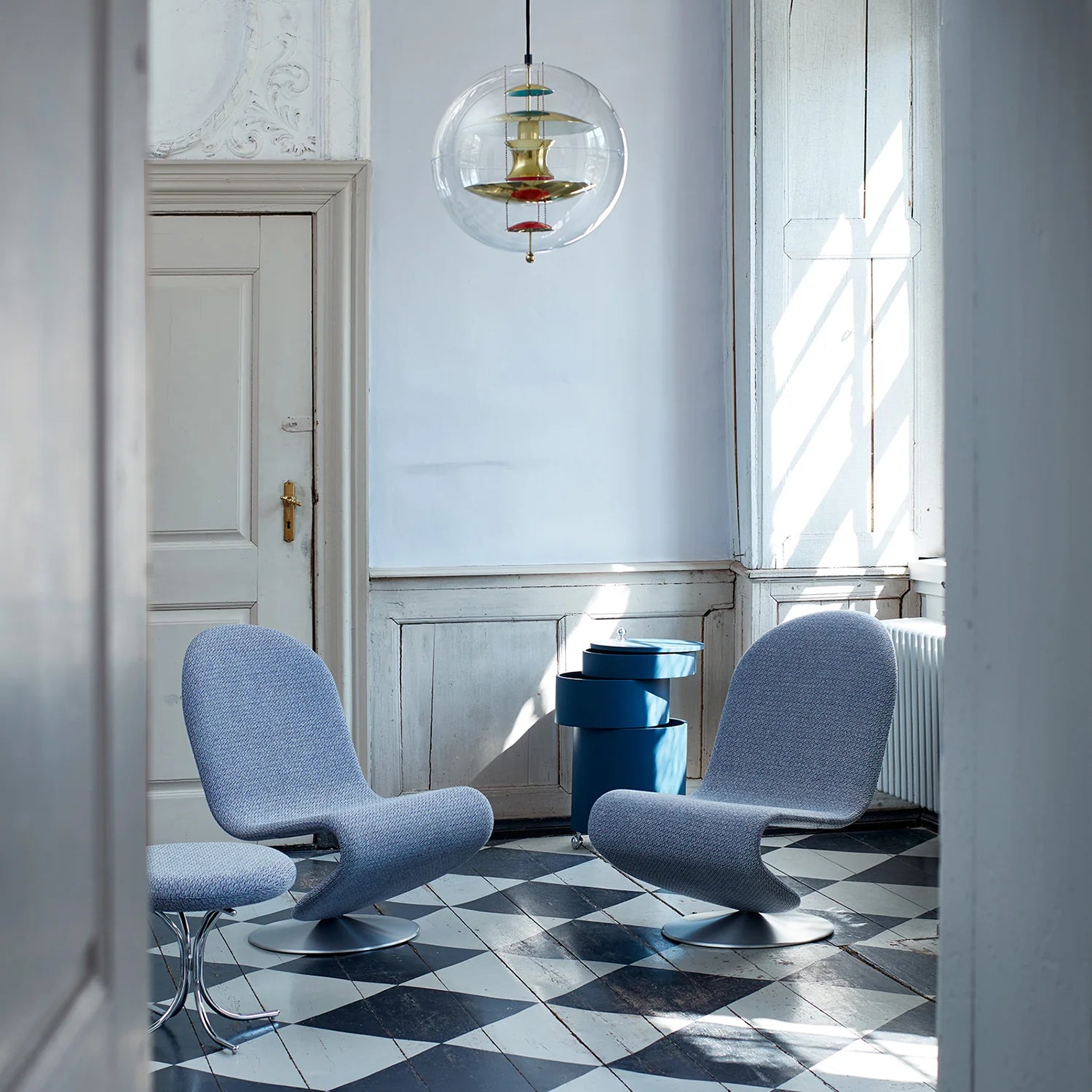
Lamps from the Fun collection
The lamps from the Fun collection embody elegance in its purest form. Timeless design and extraordinary attention to detail have given the Fun projects recognition and acclaim. Fun is still considered one of the best series by Verner Panton - and it's no wonder, as these lamps have been in continuous production since 1964.
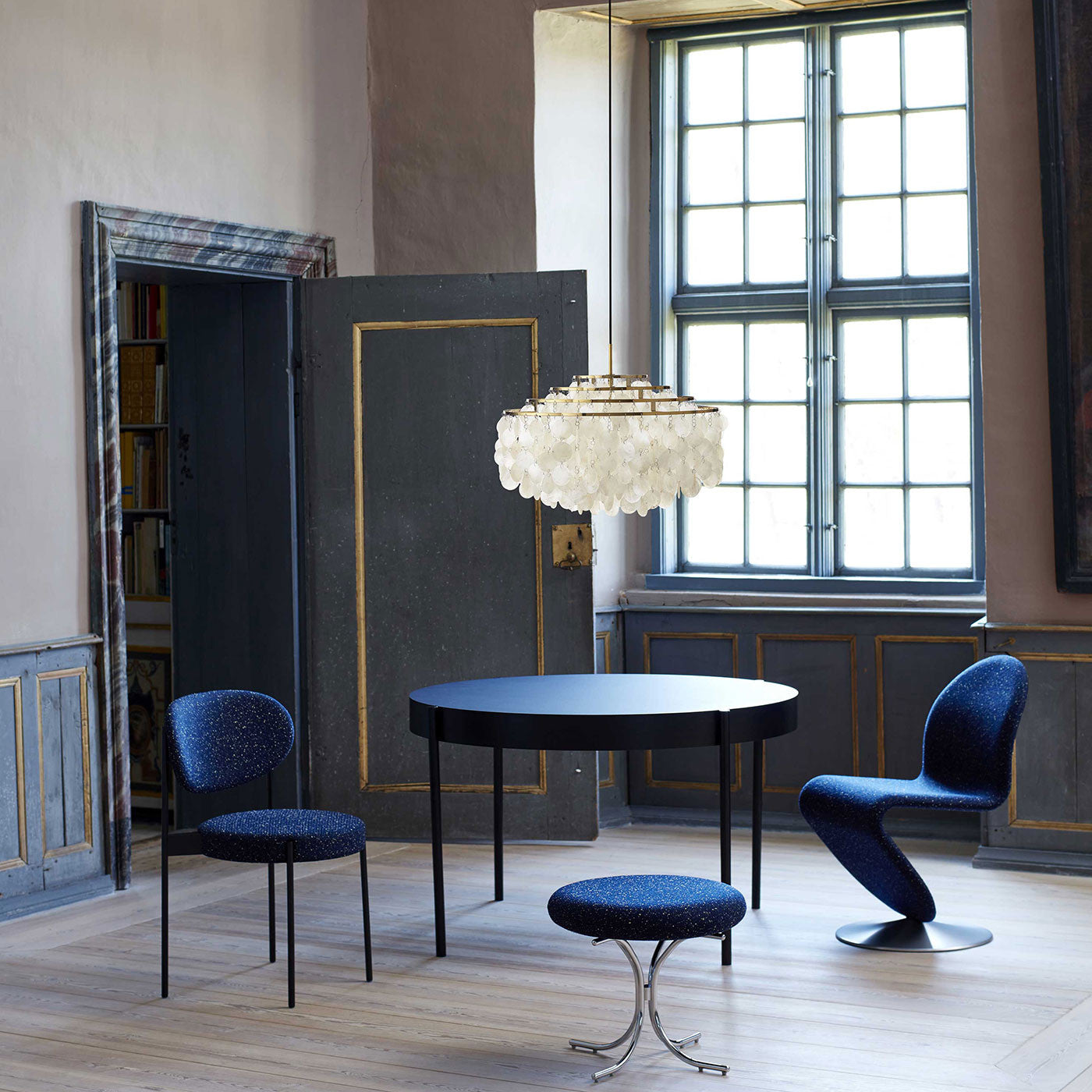
Lamps from the Spiral collection
The lamps from the Spiral collection are impressive decor elements that undoubtedly catch the eye and make it hard to pass by without noticing them. What sets the Spiral lamps apart from other designs by Verner Panton is their extraordinary elegance. The entire Spiral series was a kind of experiment with colors and forms - the silver spirals reflect light, creating a truly fairy-tale atmosphere in a futuristic style.

Recent Achievements
Verner Panton was a passionate artist who dedicated his entire life to art and design. In his later years, he focused on designing chairs, tables, and sofas, as well as creating unique lighting. In 1995, in collaboration with Swatch Art, Panton created the Clock Tower, an incredibly striking and breathtaking sculpture made up of 63 colorful rings. The installation was created for the Summer Olympics in Atlanta.
The last project that came from the proverbial 'brush' of the artist was a wall full of colors, referencing the split spectrum of light. This extraordinary sculpture, or rather installation, like most of Panton's works, was made of plastic, and its intended location turned out to be the interior of the Erco office in London. Verner Panton passed away a year after he completed his colorful wall project.
The Phenomenon of Verner Panton
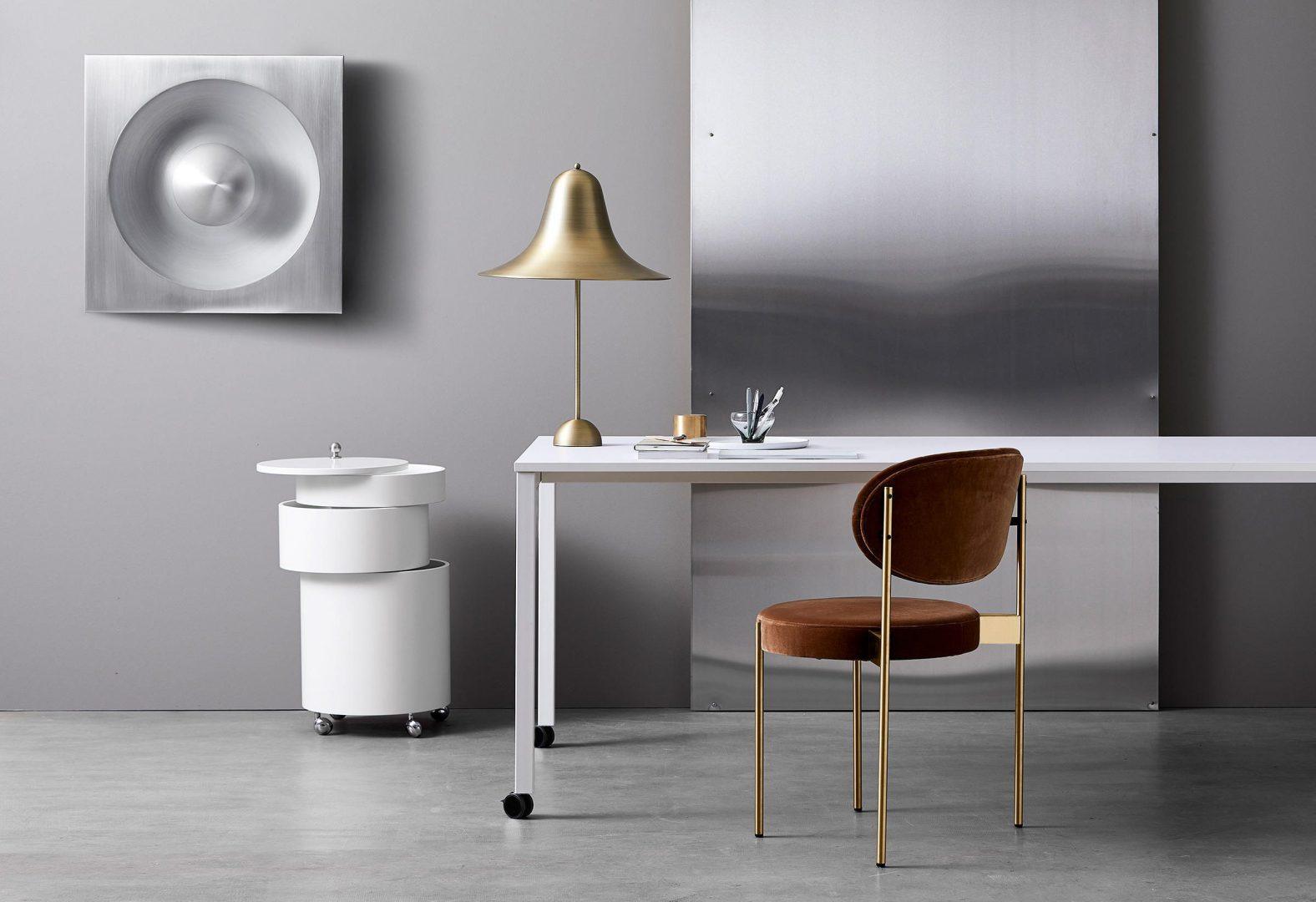
Verner Panton stood out not only for his designs, which significantly deviated from the standards of Scandinavian style, but also for his way of thinking. His incredibly intriguing ideas were encapsulated in forms that provided a kind of escape from everyday life. Among his numerous projects, it is not only the furniture with extraordinary shapes that deserves recognition, but also interesting lighting such as the Moon lamp and the Pantop.
The Panton lamp was designed by Verner Panton in 1980. This model is currently available in both floor and pendant forms. The light emitted by the lamp is directed downwards, creating a distinctive, warm atmosphere in your interior.

When talking about Panton's inspirations, one cannot forget that the peak of his career occurred in the early 1960s, when comforts like televisions and widely available refrigerators were just debuting. People fantasized about the new possibilities that technological advancements offered, and increasingly leaned towards futuristic visions, which were also reflected in interior arrangements. Verner Panton was fascinated by the future and what it could bring, and perhaps that is why he is now regarded as one of the most popular designers who truly ahead of his time.
At Eye on Design, you will find iconic designs by Verner Panton that will enhance your interior and give it a distinctive, eclectic style. Explore our collection now.